Is The Green Mile Based on a True Story? The Real History Behind It
No. The Green Mile (1999), the Frank Darabont film starring Tom Hanks, is not a true story. It is adapted from Stephen King’s 1996 serial novel, and its main character, John Coffey, is invented. The story does echo real Jim Crow-era injustice, though. Many readers see a clear parallel to George Stinney Jr., a Black 14-year-old executed in South Carolina in 1944.
Put simply, the people, the prison and the miracles are made up. The racism, the rushed justice and the electric chair are real history. This article covers the 1999 film and the novel it is based on.
Is The Green Mile based on a book?
Yes. The Green Mile is based on Stephen King’s novel of the same name. The book came out as a serial from March 28 to August 29, 1996, and was published as a single volume on May 5, 1997, by Signet Books. It won the Bram Stoker Award for Best Novel in 1996.
The film is a 1999 American epic fantasy drama written and directed by Frank Darabont, based on the 1996 novel by Stephen King. Darabont turned the novel into a screenplay in under eight weeks. The cast includes Tom Hanks, David Morse, Bonnie Hunt, Michael Clarke Duncan, James Cromwell, Michael Jeter, Doug Hutchison, Sam Rockwell and others, and Warner Bros. distributed it.
The title is a nickname inside the story. Death row at the fictional Cold Mountain Penitentiary is called “The Green Mile” because of the color of its linoleum floor.
What in The Green Mile is fiction?
Nearly everything that happens on screen in The Green Mile is fiction. King’s novel falls under dark fantasy, Southern Gothic and magic realism. Magic realism means a story told in a realistic setting where supernatural events are treated as ordinary. Here is what was invented:
- The characters. Paul Edgecomb, John Coffey, the cruel guard Percy Wetmore and the killer “Wild Bill” Wharton are all made up. None of them is based on a documented real person.
- The prison. Cold Mountain Penitentiary does not exist. The Stinney case, by contrast, took place in a real South Carolina town and prison.
- The healing powers. Coffey’s ability to cure illness, and to take sickness out of one person and put it into another, is pure fantasy. In the book, John releases the disease he drew out of Melinda into Percy, who goes mad, shoots Wharton dead and then falls into a catatonic state he never recovers from.
- Mr. Jingles. The mouse who lives far longer than a mouse should is part of the story’s supernatural side.
- The time frame. The novel switches between Paul as an old man in a nursing home in 1996 and his days in 1932 as block supervisor on death row. The film moves the main story to 1935.
Was John Coffey based on George Stinney Jr.?
The link between John Coffey and George Stinney Jr. is a widely drawn parallel, not a documented source. Readers and commentators drew the connection after the fact; the novel itself never mentions Stinney. Treat any claim that King “confirmed” the link with caution unless it comes with a statement from King you can check.
The overlap is still easy to see. Like Coffey, Stinney was accused of murdering two white girls, in 1944. Both stories feature a Black defendant in the segregated South whose guilt everyone assumes, and both end in the electric chair.
The real case is not the same story with the names changed, though. In the novel, John Coffey is a 6-foot-8 giant, while George Stinney Jr. was a slight 14-year-old boy. The table below compares the two directly.
| Detail | The Green Mile (fiction) | George Stinney Jr. case (real) |
|---|---|---|
| Year | 1932 (novel), 1935 (film) | 1944 |
| Setting | Fictional Cold Mountain Penitentiary | South Carolina |
| Accused | John Coffey, a huge adult man | George Stinney Jr., a 14-year-old boy |
| Crime alleged | Murder of two white girls | Murder of two white girls |
| Supernatural elements | Healing powers, a long-lived mouse | None |
| Method of execution | Electric chair | Electric chair |
| Innocence recognized | Only by the guards, privately | Conviction vacated 70 years later, in 2014 |
What really happened to George Stinney Jr.?
George Stinney Jr. was 14 when he was executed in the electric chair in 1944. He is the youngest American with a confirmed exact age to be both sentenced to death and executed in the 20th century.
The case against Stinney was thin. Police questioned him alone for hours, with no lawyer or parents present. They said he confessed, but there was no written statement and no physical evidence. His slight build, 5 feet 1 inch and roughly 90 to 95 pounds, cast doubt on whether he could have overpowered two victims. The trial lasted about two and a half hours, and the jury deliberated for less than 10 minutes.
Seventy years later, his conviction was overturned. A South Carolina judge vacated it in 2014 after finding that he had not received a fair trial. Today the case comes up in debates about the juvenile death penalty, coercive interrogations of minors and due process protections.
How to tell fact from fiction in The Green Mile
A simple rule works for The Green Mile: the setting is historical and the plot is invented. Use these checks as you watch:
- Real: Depression-era Southern prisons, electric chair executions, segregation, and the way a Black defendant could be convicted with little or no evidence.
- Real in spirit: A botched execution like the one Percy causes is fiction, but the electric chair could and sometimes did fail badly.
- Invented: Every named character, Cold Mountain Penitentiary, the specific crime, the healings and Mr. Jingles.
- A frame, not a memoir: Old Paul telling his story in a nursing home feels like testimony, but it is a storytelling device. There was no real-life Paul Edgecomb.
One common mistake is to treat the Stinney parallel as proof that the plot “really happened.” Stinney’s story is more brutal in its own way. He was a child, and nothing like the film’s mercy or miracles came to him.
What is the main message of The Green Mile?
The main message of The Green Mile is that the justice system can kill an innocent person, and that cruelty and goodness exist side by side. The story follows prison guard Paul Edgecomb, whose life changes when he meets John Coffey, a soft-spoken inmate with mysterious healing abilities.
The guards come to believe Coffey is innocent, and possibly something close to holy. They carry out the execution anyway. That leaves Paul with guilt he lives with for decades, and King treats his unnaturally long life as a burden more than a gift. The story’s racial framing has drawn criticism too. In 2001, Spike Lee named The Green Mile as an example of the “magical Negro” trope, a Black character who exists mainly to help white characters. Coffey suffers and dies while mostly healing white people.
FAQ
– Which Green Mile star passed away?
Michael Clarke Duncan, who played John Coffey, died in 2012. The role earned him an Academy Award nomination for Best Supporting Actor and remains his best-known performance. Other cast members have also died since the film’s release, including Michael Jeter and Harry Dean Stanton.
– What were John Coffey’s last words before he died?
In the film, John Coffey’s last moments center on his fear of the dark. He asks the guards not to put the hood over his face, and Paul agrees. Just before that, he tells Paul he is ready to go because he is worn out by the cruelty he feels in the world.
– Did the parents in The Green Mile ever learn John was innocent?
No. In the story, the murdered girls’ family never learns that John Coffey was innocent. Paul finds out the real killer was Wild Bill Wharton, but he has no way to prove it in court, so the truth stays with the guards.
– Was John Coffey an angel?
The Green Mile never says outright that John Coffey is an angel. King leaves his nature open. Coffey’s initials, J.C., and his miracles of healing invite a Christ-like reading, and Paul wonders what it means that he helped execute a gift from God.
– Is the Green Mile based on a true story, according to fan theories?
No. Fan discussions mostly agree that The Green Mile is fiction, and they focus on how closely it resembles the George Stinney Jr. case. That resemblance is real, but it is a parallel drawn by readers. The novel itself is Stephen King’s original story.
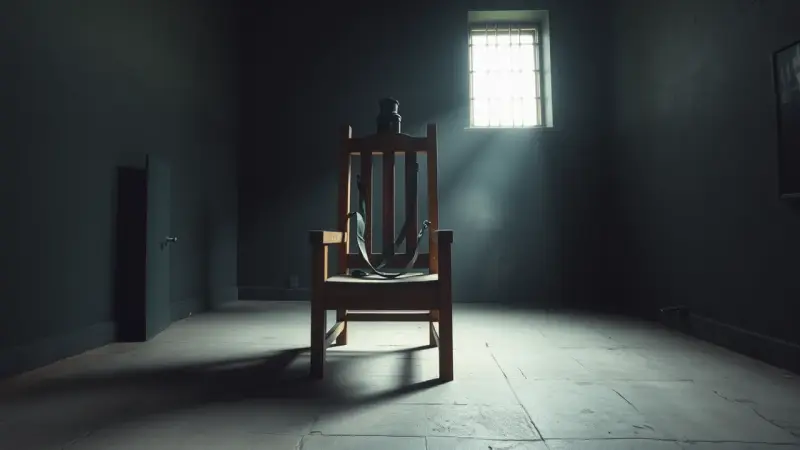
The header image is an AI-generated illustration, not an actual photo or film still.