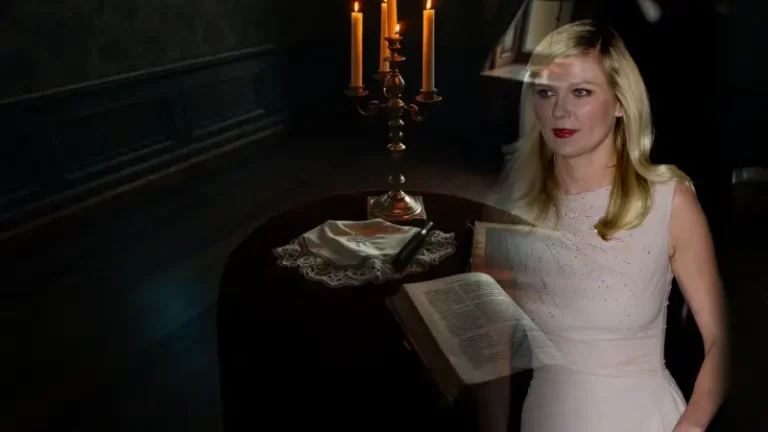

Marion Cotillard as Luisa Contini in Nine (2009): The Wife Who Takes It All
In Rob Marshall’s Nine, Marion Cotillard plays Luisa Contini, the wife of a film director who cannot stop lying to the women who love him. Luisa has the least screen time of the film’s many women, but she has the song people remember. “Take It All” is the number in which a devoted wife finally stops absorbing her husband’s betrayals.
It is also the moment that readers of Cotillard’s best-loved roles usually bring up. Taiwanese film writers listing her key performances have pointed to Luisa and that song, because the part is small but gives her a complete emotional arc: loyalty, humiliation, and a clear-eyed goodbye.
Who Luisa Contini is
Nine was released in the United States on December 25, 2009. Marshall directed it from a screenplay by Michael Tolkin and Anthony Minghella. It adapts the stage musical by Maury Yeston and Arthur Kopit, which in turn draws on Federico Fellini’s 8½. At its center is Guido Contini (Daniel Day-Lewis), a celebrated Italian director who has no script, no inspiration and a crowd of women pulling at him.
Luisa is his wife and the one person who has seen him clearly for years. Around her are his mistress (Penélope Cruz), his muse (Nicole Kidman), his confidante and costume designer (Judi Dench), his mother (Sophia Loren), an American journalist (Kate Hudson) and a figure from his childhood (Fergie). Luisa is the only one with a legal claim on him, and the film uses her as its moral weight. She is a former actress who gave up her own career to support his.
The performance: restraint, then one open wound
Cotillard plays Luisa quietly for most of the film. She is polite, watchful and tired, and she has stopped expecting an apology. That control is what makes her two musical moments land. On stage, the role of Luisa was first played by Karen Akers. The film’s new songs were written by Yeston specifically for the adaptation, and “Take It All” was one of them.
The song is a confrontation rather than a plea. Luisa tells her husband that he has had everything, and the film shows her reaching the end of her patience. Cotillard sings it with little ornament, and the effect is sharper for it. TIME later wrote that, for all the movie’s campy theatricality, she ended up walking away with the film through this ballad about a broken marriage.
How it was received
Nine divided critics. Rotten Tomatoes’ consensus calls it a game, great-looking ensemble in a film that is chaotic and curiously distant. Cotillard was widely singled out within that ensemble. “Take It All” was nominated for the Academy Award for Best Original Song, with Yeston as the nominee, and Cotillard herself earned a Golden Globe nomination, the second of three she has received so far, according to TIME.
The film’s best-known award nomination went to Cruz, who was nominated for the supporting actress Oscar. But Cotillard’s Luisa is the performance that tends to be revisited, especially by viewers who came to the film through the song.
Where the role sits in her career
Cotillard took the part soon after her Best Actress Oscar for La Vie en Rose (2007), as one of her first films after that win. TIME notes that it put her alongside far more seasoned performers. Day-Lewis had stepped into the lead after Javier Bardem left the project, so the cast around her was an unusually large one for a Marshall musical.
The role showed that she could hold her own in a big American ensemble without a showy part. Within a few years she was working for Christopher Nolan, in Inception (2010) and The Dark Knight Rises (2012), and then returning to French-language drama.
What she is doing now
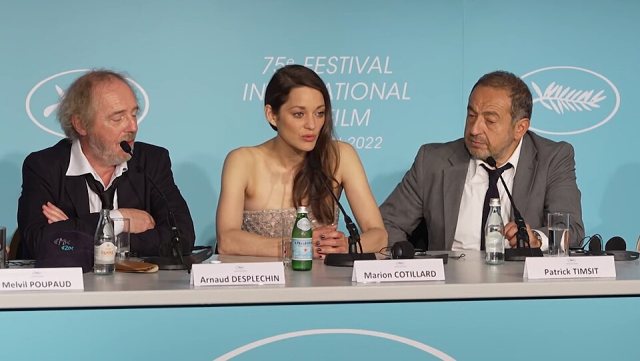
Cotillard’s latest work has been back in European cinema. In May 2026 she arrived at Cannes with two films, according to Variety: Bertrand Mandico’s Roma Elastica and Guillaume Canet’s Karma. Variety counted them as her 14th and 15th premieres at the festival. In Karma, which Canet wrote and directed, she plays Jeanne, a woman with a troubled past whose new life in northern Spain is upended when a child disappears. It had its world premiere on May 15, 2026, Out of Competition, and Deadline described it as their sixth collaboration.
Luisa Contini remains the part in which a short appearance and a single song became a lasting piece of her screen work.
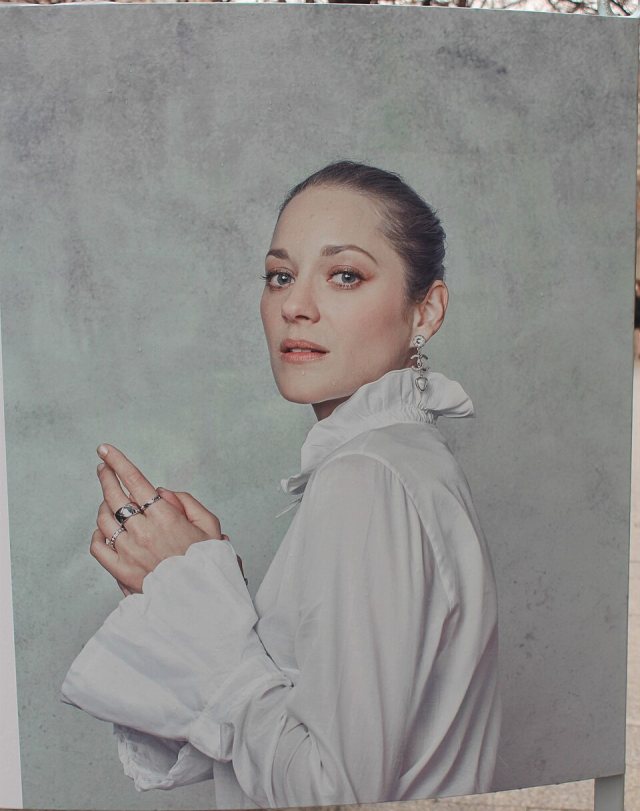
Photos of Marion Cotillard

Header photo: Harald Krichel / Wikimedia Commons / CC BY-SA 4.0, modified: resized and blended with an AI-generated background. The person in the header is a real photo; only the background is AI-generated.