Rose Byrne as Briseis in Troy (2004): The Captive Who Changes Achilles
Most of Troy is about men shouting across a beach. The scenes that stay with many viewers are quieter ones: a captive priestess in Achilles’ tent, saying little and refusing to look away. Rose Byrne played that captive, Briseis, in Wolfgang Petersen’s 2004 epic. It was the part that introduced her to a global audience.
Briseis is a Trojan priestess, cousin to Prince Paris. She is taken by the Greeks and handed to Achilles (Brad Pitt) as a spoil of war. The film makes her the human cost of the war. Time called Byrne’s work commendable in what it described as the film’s only fully fleshed female role.
Who Briseis is in the story
In Homer, Briseis is mostly a quarrel over property between Achilles and Agamemnon. Petersen’s film, written for the screen by David Benioff, gives her a place on the Trojan side and a relationship with her captor. Her capture, her time in Achilles’ tent and her last glimpse of him are the spine of the role.
The film follows one pattern with her. Achilles is introduced as a warrior who answers to no one, and Briseis is the person who is not impressed. Cinapse noted in 2026 that she has little to do beyond challenging Achilles verbally until the final reel. The part is built from small amounts of screen time, which makes every look count.
The scenes people remember
The moments that last are the early ones between captive and captor. The tension comes from restraint: a prisoner weighing how much anger she can afford, and a warrior who has never had to answer for what he takes. Byrne plays these scenes with watchfulness rather than speeches. Her Briseis is frightened but never pliant.
The role also depends on contrast with the family on the Trojan side. Byrne plays a scene of affection with Orlando Bloom’s Paris, and it shows the home she has lost. Later, from a distance, she watches smoke rise from Achilles’ pyre as survivors escape toward Mount Ida. In the closing moments, the character who began as a prize is simply a witness to the end of a war.
The film’s scale is easy to forget when thinking about her scenes. The wall and gates of Troy were built in Mexico and the city streets in Malta, with thousands of costumed performers. Byrne’s scenes work against that backdrop because they are small.
The performance and its reception
Byrne was 24 when Troy opened in May 2004. She told Time she had never waited so much in her life. She spent long stretches in a trailer near Cabo San Lucas, Mexico, during the shoot. She also admitted that the film is “not much to do with the women.” That candor suits the part: she makes the most of a role the script does not center.
Critical response to Troy as a whole was mixed. Briseis was one of the characters a few reviewers wanted more of. Cinapse, writing in 2026, put her among the characters left with too little to do. That judgment is about the script, not about Byrne’s acting.
What came before and after
Byrne arrived with real credentials. She had won the Volpi Cup at the Venice Film Festival in 2000 for Clara Law’s The Goddess of 1967, played Heath Ledger’s love interest in Two Hands, and appeared as the handmaiden Dormé in Star Wars: Episode II – Attack of the Clones (2002). She also led I Capture the Castle. Troy put her opposite Pitt, Eric Bana, Orlando Bloom, Diane Kruger, Brian Cox, Peter O’Toole and Sean Bean, and it opened US doors for her.
Later work took her far from sword-and-sandal drama. She became widely known for comedy, including Bridesmaids. In 2026 she earned her first Oscar nomination, for Best Actress, for the A24 drama If I Had Legs I’d Kick You. She won the Golden Globe for that performance in January 2026. She lost the BAFTA to Jessie Buckley, and the Oscar went to another nominee. She also appeared in the 2026 film Tow and was nominated for a Tony Award for Fallen Angels, with the ceremony held on June 7, 2026.
Troy today
The film keeps getting reappraised. In August 2026 Arrow Video released Troy on 4K UHD for the first time. It includes both the 163-minute theatrical cut and Petersen’s 196-minute Director’s Cut, which was made in 2007. Cinapse said the longer version adds more than 30 minutes and makes the central love story flow more naturally. For anyone revisiting Briseis, that cut gives the role its fullest shape.
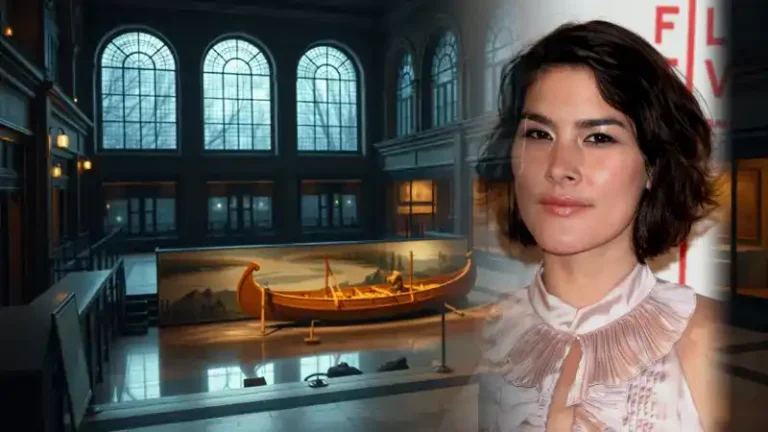
Photos of Rose Byrne

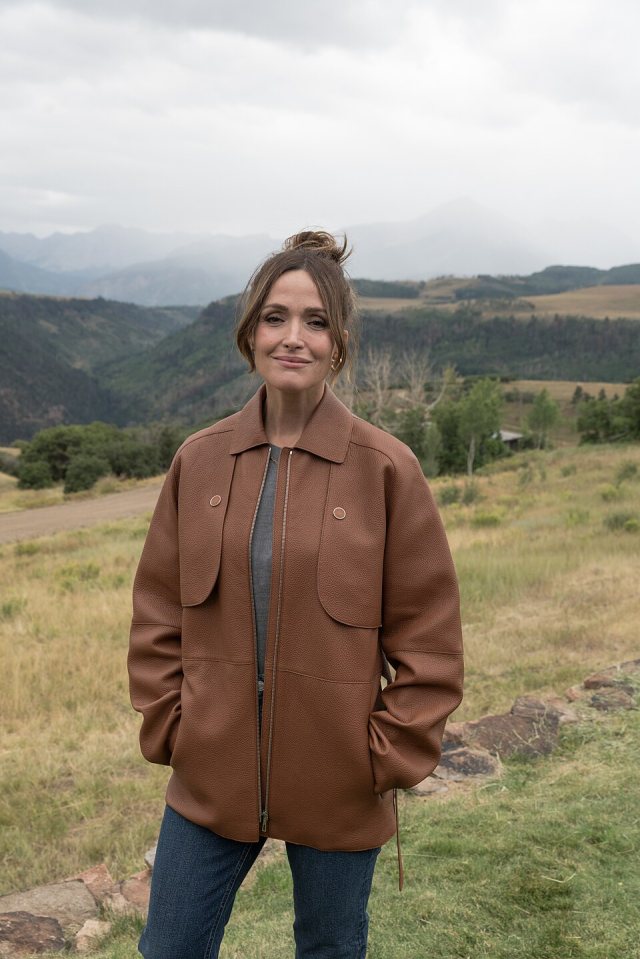
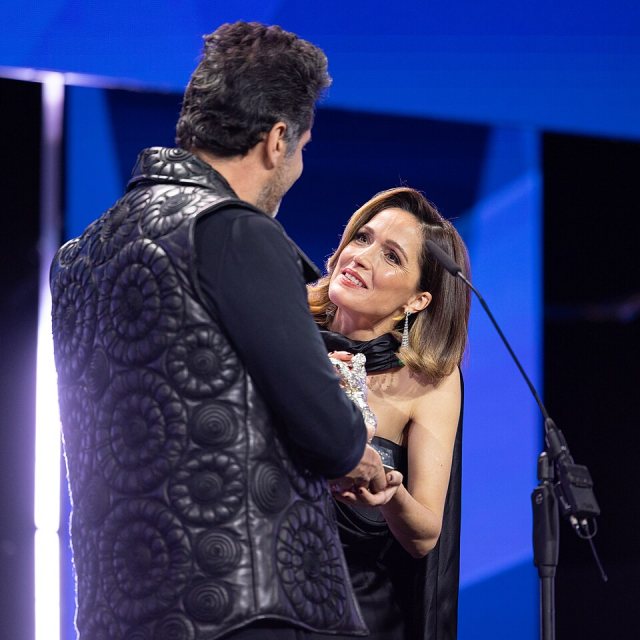
Header photo: Bryan Berlin / Wikimedia Commons / CC BY-SA 4.0, modified: resized and blended with an AI-generated background. The person in the header is a real photo; only the background is AI-generated.