Philip Seymour Hoffman: From Sandy Lyle to Capote and the Roles in Between
In Along Came Polly (2004), Philip Seymour Hoffman plays Sandy Lyle, a washed-up former child star. Sandy is the best friend of Ben Stiller’s risk-averse Reuben Feffer, and he is happy to talk himself into any scene he can. Hoffman commits to every ridiculous beat: the hopeless basketball game, the comeback ambitions, the boardroom speech he delivers when Reuben needs a stand-in. It is a small part in a studio comedy, and it is one of the reasons people still go looking for him there.
Writer-director John Hamburg, who made the film with Stiller and Jennifer Aniston, has said that Hoffman brought gravitas to Sandy’s absurdity and never played the joke. That sums up the whole career. Hoffman died on February 2, 2014, in New York City, at 46. In roughly two decades he built one of the most admired bodies of work of his generation.
Where did Philip Seymour Hoffman start?
He was born on July 23, 1967, in Fairport, New York, and took to the stage while still in high school. He graduated from New York University’s Tisch School of the Arts in 1989, then worked in theater in New York, in Chicago and on tour in Europe.
His first notable film part was a spoiled prep-school student in Scent of a Woman (1992). The breakthrough came five years later with Boogie Nights (1997), his second film with Paul Thomas Anderson after Hard Eight (1996). Magnolia, The Big Lebowski, The Talented Mr. Ripley, Almost Famous and Punch-Drunk Love followed in quick succession, usually as someone sharp, needy or funny on the edge of the frame.
What made him a character-actor favorite?
Britannica describes him as an actor known for scene-stealing supporting work, and the label fits. He rarely played the lead. He still made the lead’s scenes sharper, whether the part was a sweating confidant, a cocky acquaintance or a lonely man at the margins.
Comedy was part of that range. Sandy Lyle is a good example: the character is vain and out of touch with himself, and Hoffman plays him with total seriousness. Along Came Polly was never meant to be a prestige picture, but a performance like that makes the genre better.
What did Capote change?
In 2005 he took the title role in Capote, playing Truman Capote during the years he researched In Cold Blood. Hoffman told the New York Times that he accepted the part reluctantly. He has also said he prepared for about four and a half months, studying Capote’s voice and his television appearances.
The performance won him the Academy Award for Best Actor, presented in 2006. Britannica notes that he captured the writer’s mannerisms without turning them into caricature. It also brought a Golden Globe and a Screen Actors Guild Award.
What did he do after the Oscar?
He chose variety over comfort. He played the villain in Mission: Impossible III (2006) and a CIA agent in Charlie Wilson’s War (2007), which brought an Oscar nomination for supporting actor. He then played a priest under suspicion opposite Meryl Streep in Doubt (2008), which earned another. He also starred in Synecdoche, New York (2008), as an insecure theater director.
He made his directorial debut with Jack Goes Boating (2010), in which he also starred. Later screen work included Moneyball and The Ides of March (both 2011) and A Late Quartet (2012). In The Master (2012) he played a charismatic guru and earned his third Oscar nomination in the supporting category. It was also his last major collaboration with Anderson.
What about theater and television?
The stage mattered as much to him as film. He was nominated for Tony Awards for the revivals of True West (2000), Long Day’s Journey into Night (2003) and Death of a Salesman (2012). He was co-artistic director of the LAByrinth Theater Company in New York, where he directed and produced. On television, he received an Emmy nomination for the HBO movie Empire Falls (2005).
Critic Mark Harris wrote that even without a film career, Hoffman’s death would have meant the loss of one of the most important theater actors of his time.
How is he remembered today?
His final screen work included the role of Plutarch Heavensbee in the Hunger Games: Mockingjay films. Two films starring him, A Most Wanted Man and God’s Pocket, premiered at the Sundance Film Festival in January 2014, the month before he died.
The performances people return to range widely: the Oscar-winning Capote, the unsettling Master, the gleeful strangeness of Sandy Lyle. Britannica’s current entry, updated in July 2026, still places him among the most admired actors of his era. The supporting roles are where many viewers first met him, and for many, that is still where they find him.
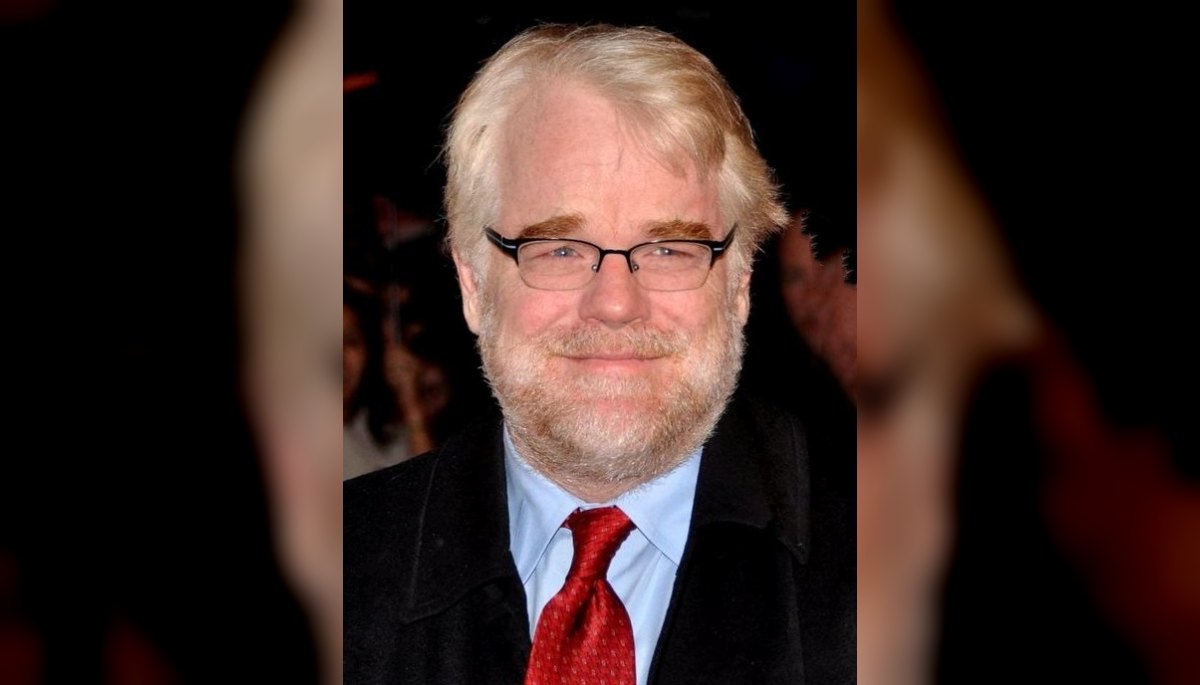
Header photo: Georges Biard / Wikimedia Commons / CC BY-SA 3.0, resized